Eucharist
The Sacrament of the Eucharist
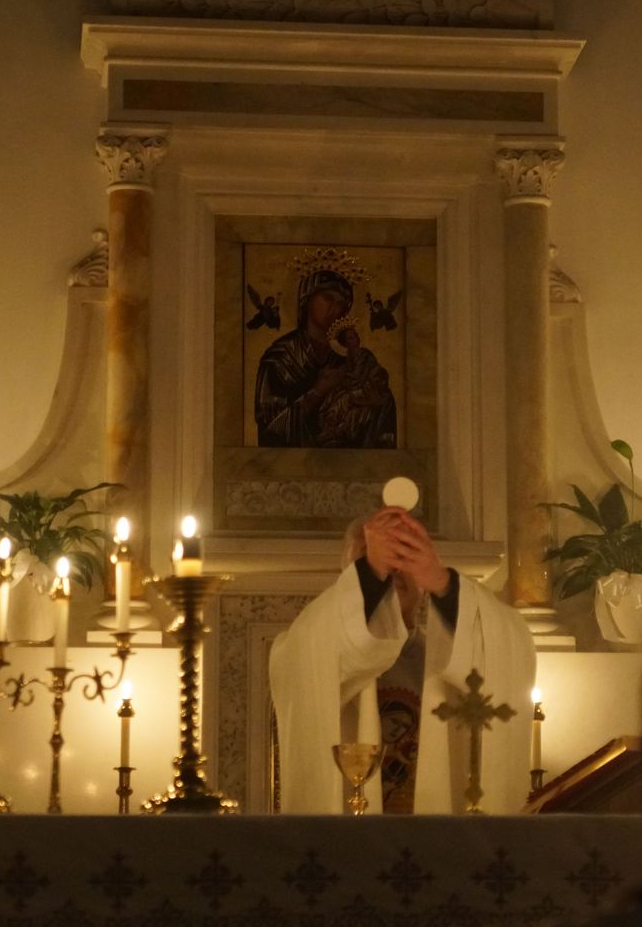
In the celebration of the Mass, the Church gathers at the very source and summit of the Christian life, the Sacrament of the Eucharist. Here we encounter not a symbol, but the true sacrifice of Christ Himself—His Body and Blood, offered for us at the Last Supper and entrusted to the Church as the living memorial of His death and Resurrection.
The Eucharist is a sign of unity and a bond of charity. It is the paschal banquet where Christ is truly consumed, where minds and hearts are filled with grace, and where we receive a foretaste of the glory promised to us.
The fruit of every Mass is Holy Communion—our intimate sharing in the Body and Blood of the LORD. The Church urges us to receive this gift as often as possible, approaching the altar in a state of grace, so that Christ may strengthen us, dwell within us, and send us forth as His living presence in the world.
1st Reconciliation & 1st Communion
Children who are baptized, usually around the 2nd grade, receive sacramental preparation to prepare them for their 1st Confession (the Sacrament of Reconciliation) and to receive their 1st Communion (Sacrament of the Eucharist).
What does it mean that the bread and wine become the Body and Blood of Jesus?
In the Catholic faith, we believe something extraordinary happens at every Mass. When the priest prays the words of consecration, the bread and wine truly become the Body and Blood of Jesus Christ. This change is called transubstantiation.
While the appearances of bread and wine stay the same, the substance, in its deepest reality, becomes Jesus Himself: His Body, Blood, Soul, and Divinity. The true identity has been transformed by the power of Christ working through the priest.
Who can receive the Eucharist?
The Church teaches that the Eucharist is the most precious gift Christ gives His people, and because of its sacredness, those who receive it should be properly disposed.
Anyone who is baptized Catholic, been properly instructed, and is in a state of grace may receive Holy Communion.
As Catholics, we observe a one-hour fast before receiving Holy Communion.
Non-Catholics, though being unable to receive Holy Communion, may come forward with arms crossed across their upper body to pay their respect to the Eucharist and receive a blessing from the clergy.
Interested in becoming Catholic to receive this precious gift from Christ? Join us at OCIA!
How do I enroll my child in First Holy Communion Classes?
Email Ashley PriceContact Ashley Price.