Anointing of the Sick
The Sacrament of the Anointing of the Sick
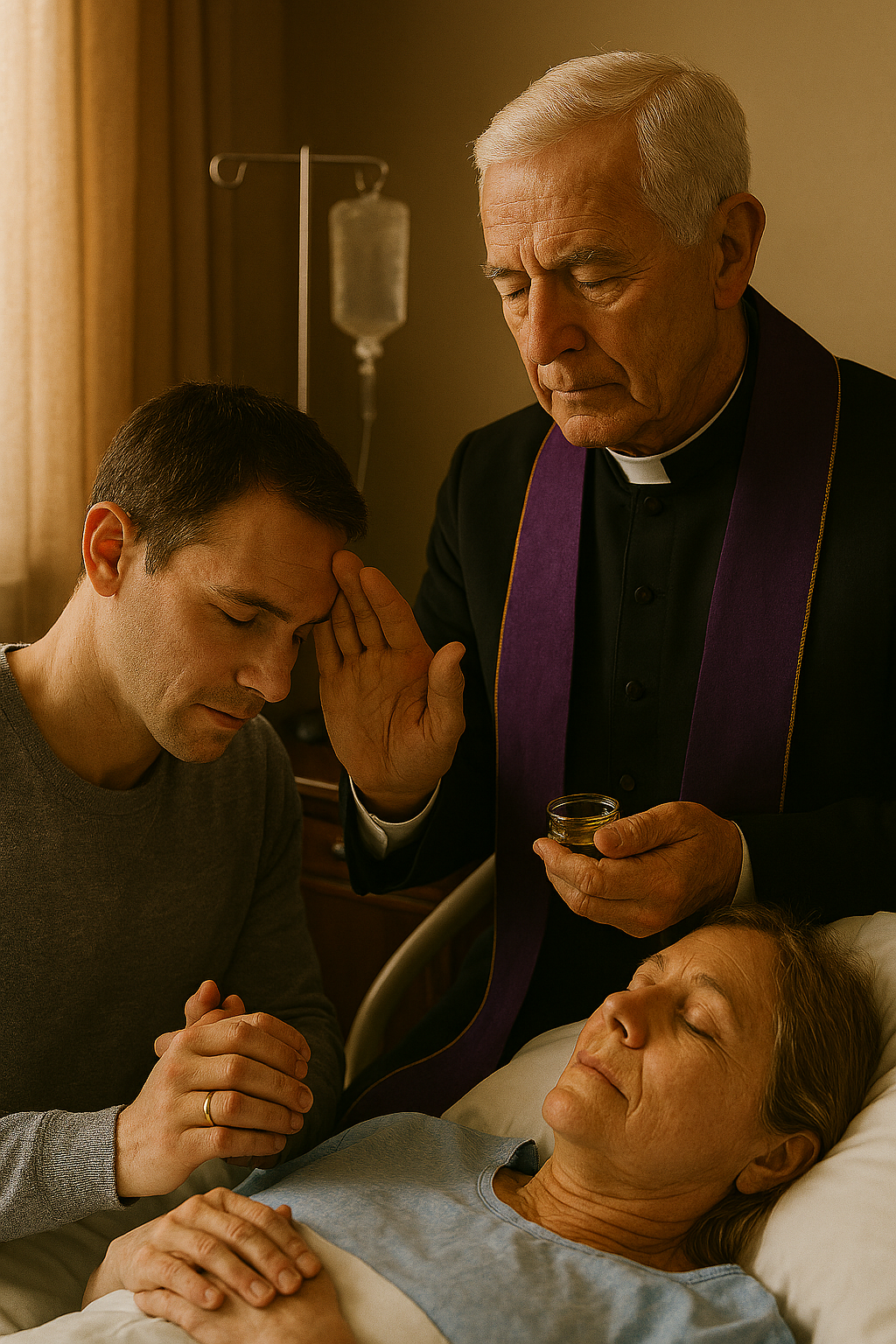
The Anointing of the Sick is one of the Church’s most tender and powerful sacraments—a moment when Christ Himself draws near to those who are suffering. Through the prayer of the priest and the anointing with holy oil, it is Jesus who touches the sick, offering healing for the whole person, body and soul.
This sacrament is not only for the final moments of life. The Church invites anyone facing serious illness, frailty, or the burdens of age to receive it, trusting that Christ desires to strengthen them with peace, courage, and the grace of the Holy Spirit.
Sometimes God grants physical healing; always He offers spiritual healing—a deep sense of being held, comforted, and renewed by His love. In this sacrament, the suffering person is united to Christ’s own Passion, discovering that no moment of pain is wasted, and no tear is unseen.
The Anointing of the Sick is a reminder that God never abandons His children, especially in times of weakness. It is a sacrament of hope, a sign that even in illness, Christ walks beside us, bringing light into places that feel heavy or uncertain.
Who can receive the Anointing of the Sick?
Any Catholic facing serious illness, preparing for major surgery, experiencing the frailty of old age, or struggling with a significant decline in health.
Is this sacrament only for those who are dying?
No.
While it is appropriate near the end of life, it is also meant to strengthen anyone who is seriously ill or suffering.
Can this sacrament be received more than once?
Yes.
If your condition worsens, or if you face a new serious illness or surgery, you may receive the sacrament again.
What actually happens during the anointing?
The priest prays over the person and anoints their forehead and hands with the Oil of the Sick, asking God to grant healing, peace, and strength.
Does the sacrament always bring physical healing?
Sometimes it does—but the Church teaches that it always brings spiritual healing, comfort, and the grace to unite one’s suffering with Christ.
Do I need to go to Confession first?
If possible, it’s encouraged. But if someone is unable to confess, the sacrament itself brings forgiveness of sins when the person has a contrite heart.
How do I request the sacrament?
By contacting the parish office or Father Orlando—the earlier the better.
Do not wait to the last minute unless it is an emergency!